Why Choose Phlebotomy Training Near St. Louis? A Guide to Getting Started
Phlebotomy Training Near St. Louis? A Guide to Getting Started
If you're searching for phlebotomy training near St. Louis, look beyond location alone. Quality training should help you understand the science behind venipuncture while providing opportunities to develop practical skills through guided, hands-on learning.
Located in East Alton, Illinois, Vein Access Technologies (VAT) serves learners and healthcare professionals throughout the Greater St. Louis and Metro East region. VAT combines specialized Vein Access education, small-group instruction, educational resources, and a teaching methodology developed around understanding why venipuncture techniques work—not simply memorizing procedural steps.
Why Location Matters When Choosing Phlebotomy Training
Choosing training near St. Louis can make hands-on education easier to fit around work and personal responsibilities while giving learners access to face-to-face instruction.
Local training can provide opportunities to:
- Participate in supervised hands-on practice
- Ask instructors questions in real time
- Develop practical venipuncture skills
- Receive direct feedback
- Learn alongside other healthcare professionals
- Access additional education and resources
Phlebotomy skills are used across numerous healthcare environments. The U.S. Bureau of Labor Statistics Occupational Outlook Handbook identifies hospitals, medical and diagnostic laboratories, physicians' offices, and other healthcare settings among the workplaces employing phlebotomists.
What Should Quality Phlebotomy Training Include?
Phlebotomy involves much more than inserting a needle. Students need to understand the patient, anatomy, equipment, safety procedures, and reasoning behind each step.
A comprehensive learning experience may address:
- Venous anatomy
- Vein assessment and selection
- Palpation
- Patient identification and positioning
- Specimen collection procedures
- Infection prevention
- Patient communication
- Sharps safety
- Clinical reasoning
Infection prevention is an essential part of this foundation. The CDC's Standard Precautions for All Patient Care address practices including hand hygiene, appropriate personal protective equipment, safe injection practices, and proper handling of potentially contaminated equipment.
Understanding these principles helps learners see venipuncture as a complete patient-care process, not a single technical procedure.
Learn the Science Behind Venipuncture
One characteristic that distinguishes VAT's approach is its emphasis on understanding the science behind Vein Access.
VAT founder M. Gail Stotler, B.A. Biology, B.S.N., R.N., Vein Access Technologist, brings a background in biology, nursing, anatomy, physiology, education, and clinical practice to the organization's training approach.
Stotler developed VAT's proprietary 21st Century Vein Access (21cVA) Method, an educational approach that connects scientific concepts with practical Vein Access skills. Rather than relying primarily on memorized steps, the method is designed to help learners understand the reasoning behind venipuncture techniques and apply that knowledge during practice.
This approach can help students think beyond the mechanics of needle insertion. Vein assessment, patient positioning, palpation, equipment selection, communication, and clinical reasoning all contribute to the overall procedure.
For prospective students comparing phlebotomy training in the St. Louis area, this is an important question to ask: Will I only learn the steps, or will I also learn why those steps matter?
Why Hands-On, Small-Group Learning Matters
Reading and classroom instruction provide important foundations, but clinical skills also require practice.
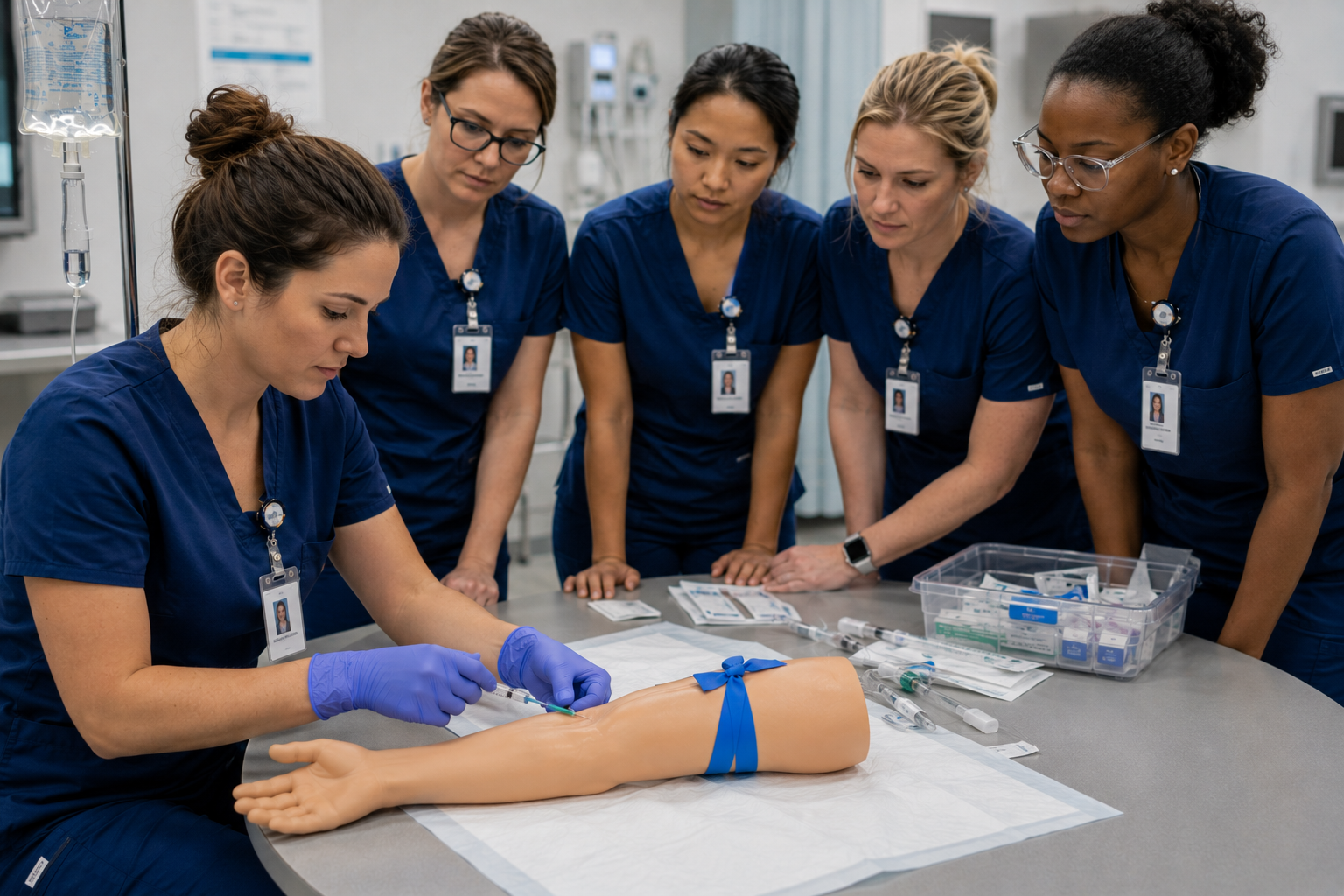
VAT's training programs emphasize hands-on learning, with its training information describing generally small class settings. A smaller learning environment can provide opportunities for closer interaction with instructors, questions, demonstrations, practice, and individualized feedback.
During hands-on learning, students can work on areas such as:
- Identifying and assessing veins
- Developing palpation skills
- Positioning patients
- Handling equipment
- Following procedural sequences
- Communicating professionally
- Applying clinical reasoning
This combination of knowledge and practice reflects VAT's broader educational philosophy: students should understand what they're doing, why they're doing it, and how the underlying science relates to the procedure.
Why Safety Training Is Essential
Anyone performing venipuncture works with blood and sharps, making safety education a fundamental part of phlebotomy training.
The OSHA Bloodborne Pathogens and Needlestick Prevention guidance addresses occupational exposure to blood and other potentially infectious materials, including practices intended to reduce exposure risks.
For students, safety training provides important context for infection prevention, sharps handling, exposure awareness, and professional responsibilities.
Developing safe habits during training can help learners understand that protecting both patients and healthcare workers is an integral part of venipuncture practice.
Continue Learning Beyond the Classroom
Vein Access education doesn't have to end after a training session.
Vein Access Technologies has developed an educational ecosystem that includes:
- Phlebotomy books
- Digital publications
- Clinical training videos
- Continuing education
- Professional seminars
- Point-of-care educational resources
VAT also offers proprietary educational tools such as veniCuff®, Vein Block®, and the Grip Pressure Assessor (GPA). These resources complement the organization's emphasis on understanding and practicing Vein Access concepts.
For healthcare professionals, access to continued education can be particularly valuable as they reinforce existing knowledge or develop additional clinical skills.
Frequently Asked Questions
Who should consider phlebotomy training?
Training may be useful for aspiring phlebotomists and healthcare professionals whose responsibilities involve venipuncture or specimen collection, including nurses, medical assistants, EMTs, paramedics, and laboratory personnel.
What makes VAT's approach different?
VAT uses its proprietary 21st Century Vein Access Method, developed by founder M. Gail Stotler. The approach emphasizes understanding the scientific principles and clinical reasoning behind Vein Access rather than relying only on memorized procedural steps.
Why is hands-on phlebotomy training important?
Hands-on education gives learners opportunities to apply concepts, practice techniques, ask questions, and receive instructor feedback while developing practical skills.
What safety topics should phlebotomy training cover?
Training should address infection prevention, bloodborne pathogen awareness, sharps safety, equipment handling, patient identification, and other safety considerations associated with blood collection.
Where is Vein Access Technologies located?
VAT is located in East Alton, Illinois, serving learners and healthcare professionals throughout the Greater St. Louis and Metro East region.
Begin Your Phlebotomy Training With Vein Access Technologies
Choosing a phlebotomy training program isn't simply about learning how to perform a procedure. Strong education helps you understand the anatomy, science, safety principles, and clinical reasoning behind the skills you're developing.
At Vein Access Technologies, that philosophy is reflected in hands-on education, small-group learning, the proprietary 21st Century Vein Access Method, and educational resources designed to support continued professional development.
If you're looking for phlebotomy training near St. Louis, explore VAT's Phlebotomy and IV Training programs to learn more about available educational opportunities.
Ready to discuss your training options? Contact Vein Access Technologies to learn more and find a training opportunity that fits your professional development goals.
Phone: (618) 259-7781
Email: mgailstotler@VATmethod.com
Recent Posts