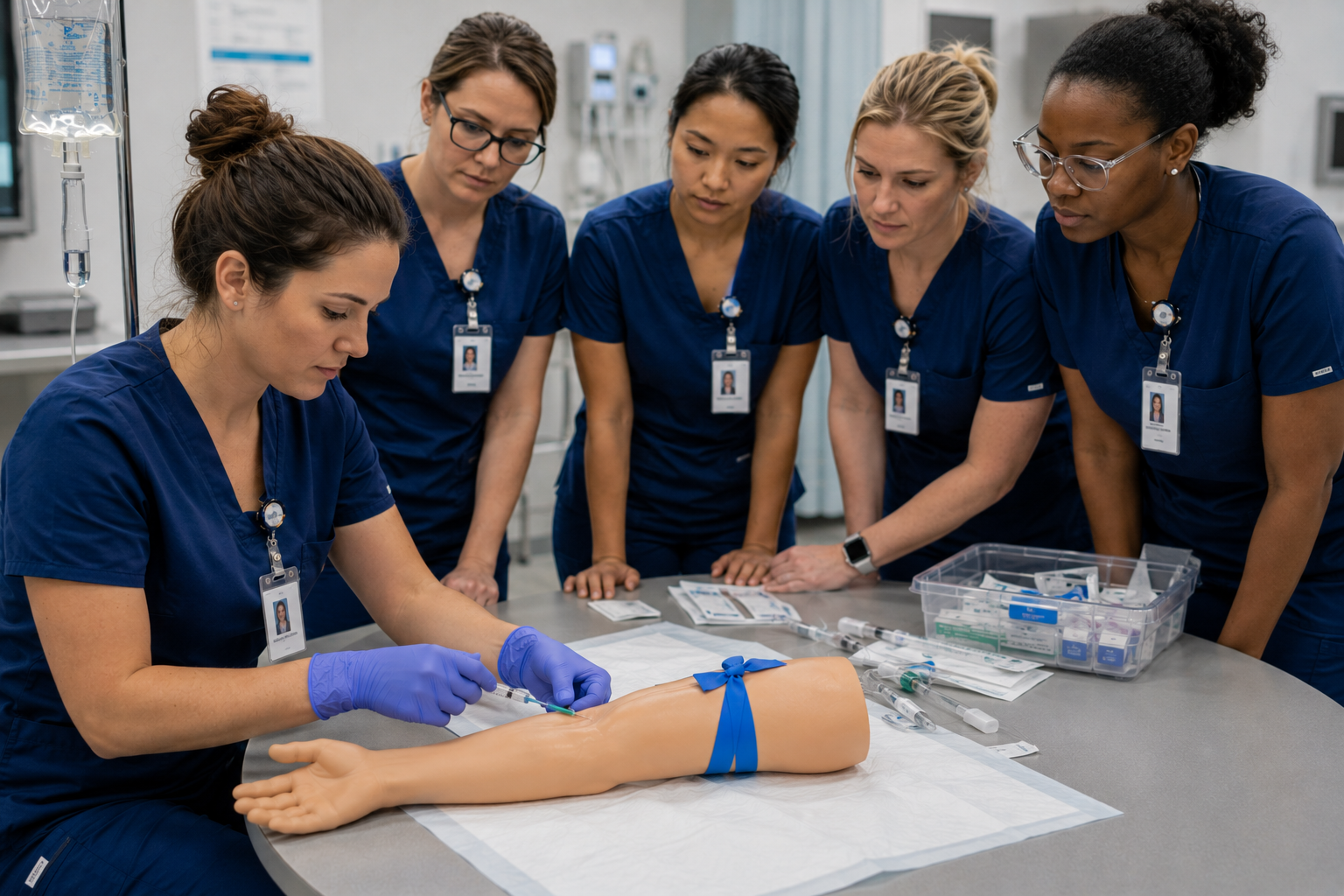
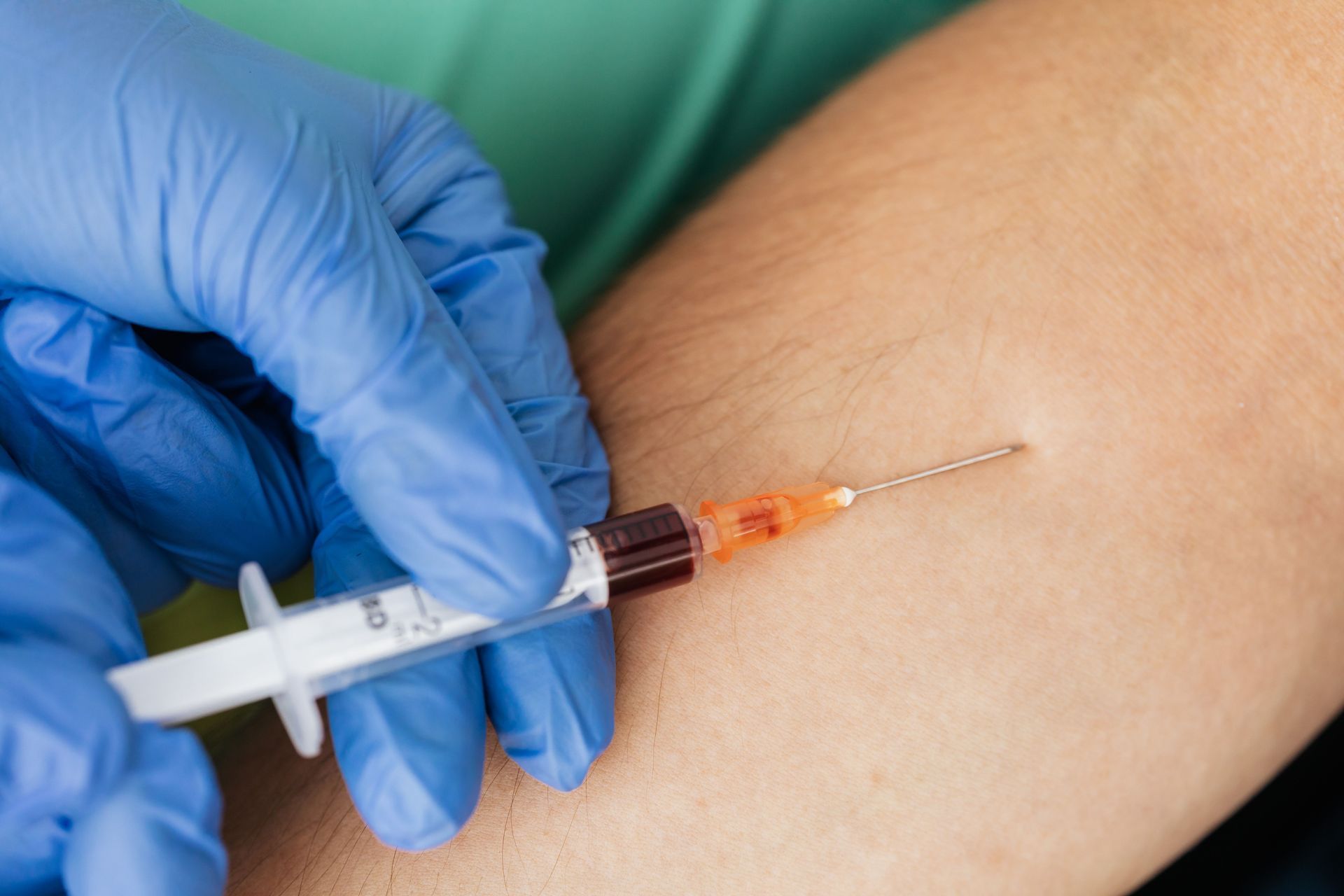
Phlebotomy training videos have become valuable learning tools for students and healthcare professionals looking to strengthen their venipuncture knowledge. They allow learners to review procedures, visualize proper techniques, and reinforce classroom instruction at their own pace. However, videos alone cannot replace supervised clinical practice. The most effective education combines visual learning with hands-on experience, instructor feedback, and repeated skill development.
At Vein Access Technologies (VAT) in East Alton, Illinois, educational videos are used to complement—not replace—hands-on phlebotomy and IV training. This balanced approach helps healthcare professionals throughout the Greater St. Louis area develop both knowledge and clinical confidence.
Why Visual Learning Matters in Phlebotomy Education
Healthcare education involves both theory and practical application. Reading textbooks provides foundational knowledge, but seeing a procedure performed correctly helps students better understand each step.
Training videos can demonstrate:
- Proper patient preparation
- Equipment setup
- Vein assessment techniques
- Tourniquet application
- Specimen collection procedures
- Safety protocols
- Professional patient communication
Watching these procedures repeatedly helps reinforce concepts before students practice them in a supervised environment.
For many learners, visual instruction can make procedures easier to understand and review before hands-on practice.
What Training Videos Can Teach
High-quality instructional videos do more than demonstrate procedures—they explain the reasoning behind them.
A well-designed phlebotomy training video should help learners understand:
Proper Vein Assessment
Successful venipuncture begins with evaluating the vein before selecting an insertion site.
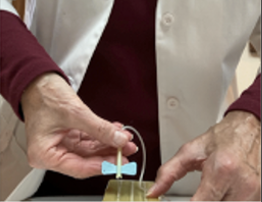
Videos can demonstrate how experienced clinicians inspect and palpate veins while discussing factors such as vein size, direction, elasticity, and stability.
Understanding why a vein is selected is just as important as seeing the procedure performed.
Patient Interaction
Technical ability is only one part of quality patient care.
Training videos can model professional communication, patient identification, and techniques for helping patients feel comfortable during blood collection.
Observing experienced healthcare professionals interact with patients gives learners useful examples of professional communication during the procedure.
Safe Clinical Practices
Instructional videos can reinforce infection prevention, equipment preparation, and specimen handling while emphasizing patient safety throughout the procedure.
These visual reminders can help students understand the sequence and purpose of important clinical practices.
What Videos Cannot Replace?
Although instructional videos are valuable educational resources, they cannot fully prepare someone to perform venipuncture independently.
Clinical competence requires:
- Hands-on practice
- Instructor feedback
- Skill repetition
- Patient interaction
- Clinical decision-making
- Confidence developed through supervised experience
Students may understand the theory after watching a video, but performing venipuncture requires applying that knowledge through supervised practice.
That's why strong healthcare education programs combine multiple learning methods rather than relying on a single resource.
The Best Learning Happens When Resources Work Together
Successful learners rarely depend on just one educational tool.
Instead, they combine:
- Classroom instruction
- Training videos
- Reference books
- Practical laboratory sessions
- Instructor coaching
- Continuing education
Each learning method reinforces the others.
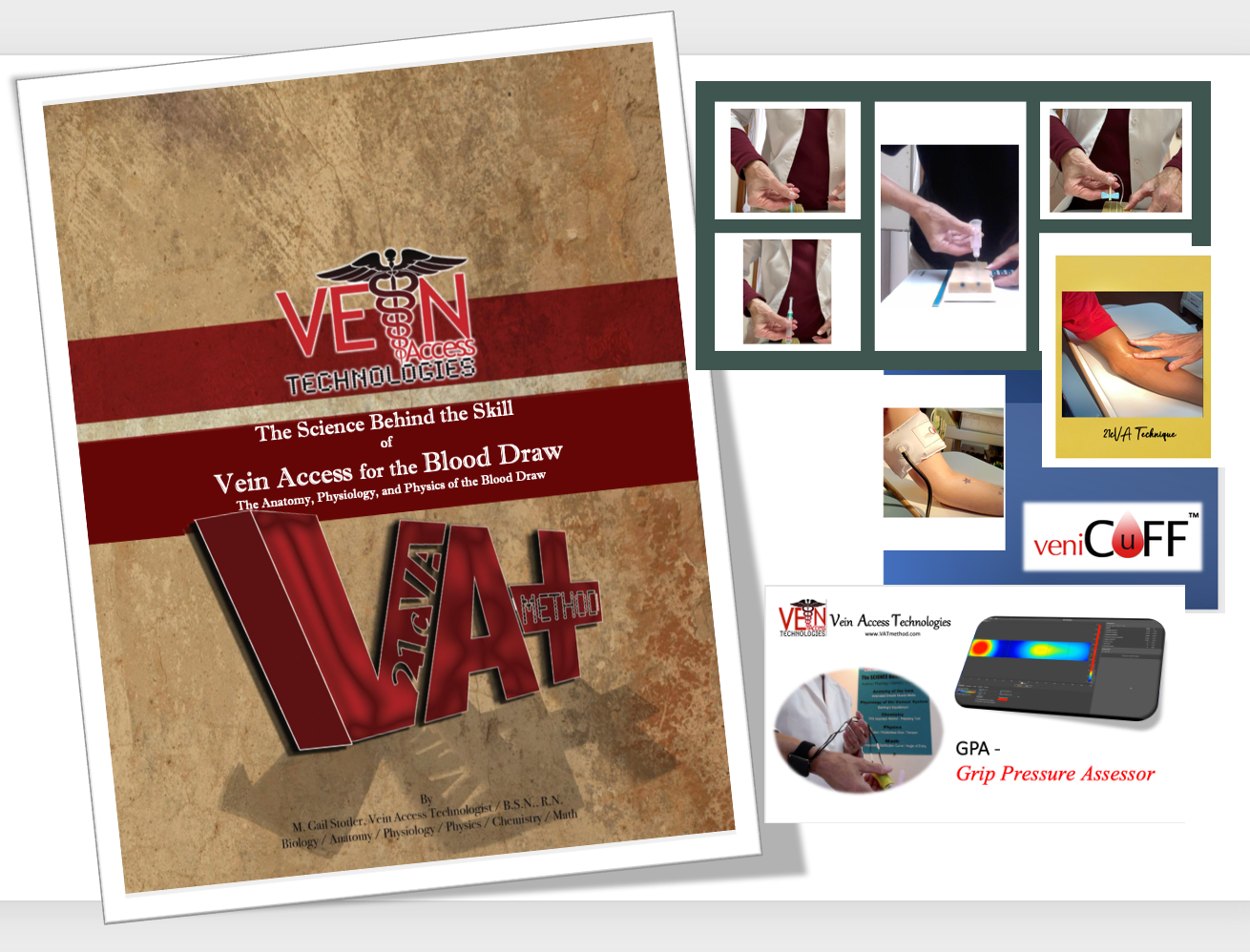
At Vein Access Technologies, students have access to professional publications, clinical videos, and innovative educational products such as veniCuff®, Vein Block®, and the Grip Pressure Assessor (GPA). These resources support classroom instruction by helping learners better understand vein assessment and venipuncture principles before applying them in supervised practice.
Learners can also explore VAT's
STEM-Based Vein Access Learning Resources for additional educational materials that reinforce vein access concepts and support continued skill development.
This blended learning approach gives students several ways to review concepts while developing their practical skills.
Choosing Quality Phlebotomy Training Resources
Not all educational videos are created equal.
When evaluating training materials, look for resources that:
- Reflect current clinical best practices
- Emphasize patient safety
- Explain the reasoning behind techniques
- Are created by experienced educators
- Complement structured training programs
Videos should support professional education rather than replace it.
Learners benefit most when instructional materials are part of a comprehensive curriculum led by qualified instructors.
Frequently Asked Questions
Are phlebotomy training videos enough to learn venipuncture?
No. Videos are valuable educational resources, but learning to perform venipuncture requires supervised hands-on practice and instructor feedback.
What should I look for in a training video?
Look for videos developed by experienced healthcare educators that emphasize proper technique, patient safety, vein assessment, and the reasoning behind the procedure.
Can experienced healthcare professionals benefit from training videos?
Yes. Instructional videos can help healthcare professionals review techniques, revisit procedures, and reinforce concepts as part of ongoing education.
Why are hands-on classes still necessary?
Hands-on instruction allows learners to practice skills, receive immediate feedback, and develop confidence while applying what they have learned.
Where can I find professional phlebotomy training near St. Louis?
Vein Access Technologies in
East Alton, Illinois, offers phlebotomy and IV training supported by educational resources and hands-on instruction for healthcare professionals throughout the Greater St. Louis region.
Enhance Your Learning with Vein Access Technologies
Quality healthcare education extends beyond the classroom. Combining experienced instruction, practical experience, and effective learning resources gives students multiple ways to understand and apply venipuncture concepts.
At Vein Access Technologies, training is supported by instructional videos, educational publications, innovative learning tools, and hands-on instruction. Whether you're beginning your healthcare career or strengthening existing Vein Access skills, these resources are designed to support continued learning.
Learn more about VAT'sPhlebotomy and IV Training programs and educational resources by visiting Vein Access Technologies.
Phone: (618) 259-7781
Email: mgailstotler@VATmethod.com