What Does It Mean for Venipuncture to Be STEM-Based?
STEM-Based Venipuncture-The Vein Access Technologies Method
What does it mean for a venipuncture—a blood draw or IV—to be STEM-based?
STEM means Science, Technology, Engineering, and Math. Vein Access Technologies (VAT) took these scientific laws and principles and applied them to the venipuncture procedure: locating a vein, dilating a vein, grading a vein, accessing the vein with a needle, and then performing the intended function of that venipuncture—blood collection or infusion of fluids and medications.
That is the foundation of VAT’s 21st Century Vein Access (21cVA) Method: bringing science into a procedure performed every day in healthcare.
What Does STEM Have to Do With Venipuncture?
Quite a lot.
Venipuncture involves anatomy, physiology, chemistry, physics, engineering, and math. Veins have physical characteristics. Pressure affects them. Friction matters. How a vein is located, assessed, and prepared matters. Even how a needle is held and enters the skin involves physical forces.
VAT brings these principles together through STEM+Medicine.
Instead of teaching someone only what to do, the VAT Method focuses on why it is done that way. Understanding the science gives healthcare professionals a framework for making informed decisions rather than relying primarily on repetition or trial and error.
Locate, Dilate, and Grade the Vein
A key part of the VAT Method is learning to locate, dilate, and grade a vein before attempting access.
VAT’s 21cVA Palpation Technique places particular emphasis on touch rather than depending mainly on sight. The method also incorporates wet palpation using 70% isopropyl alcohol.
Why does this matter?
A vein that is easy to see is not automatically the best vein to access. Palpation can provide information that sight alone cannot. VAT teaches learners to use that information to better understand and grade the vein before introducing the needle.
The process becomes:
Locate → Dilate → Grade → Access → Perform the Intended Function
This turns Vein Access into a process that can be understood, taught, practiced, evaluated, and repeated.
Healthcare professionals can learn this methodology through VAT’s Phlebotomy and IV Training programs.
How Does This Differ From Current Methods of Venipuncture?
As VAT explains it, when Science is applied, venipuncture becomes something more predictable, repeatable, and successful.
Compare this with what VAT identifies as a familiar reality in venipuncture: trial-and-error, hit-and-miss, repeat, unacceptable and rejected samples of blood, patient discomfort, and the complications, compromises, injuries, and failures that can follow.
Hands-on practice is still essential. The difference is what happens around that practice.
When an attempt is unsuccessful, the learner can look at what happened. Was the vein properly located? Was it adequately dilated? How was it graded? What factors affected needle entry?
Instead of simply labeling it a “difficult vein” and trying again, the learner has a framework for understanding what happened and what can be done differently.
What Do Technology, Engineering, and Math Look Like in Practice?
VAT has developed tools that help put STEM principles into practice.
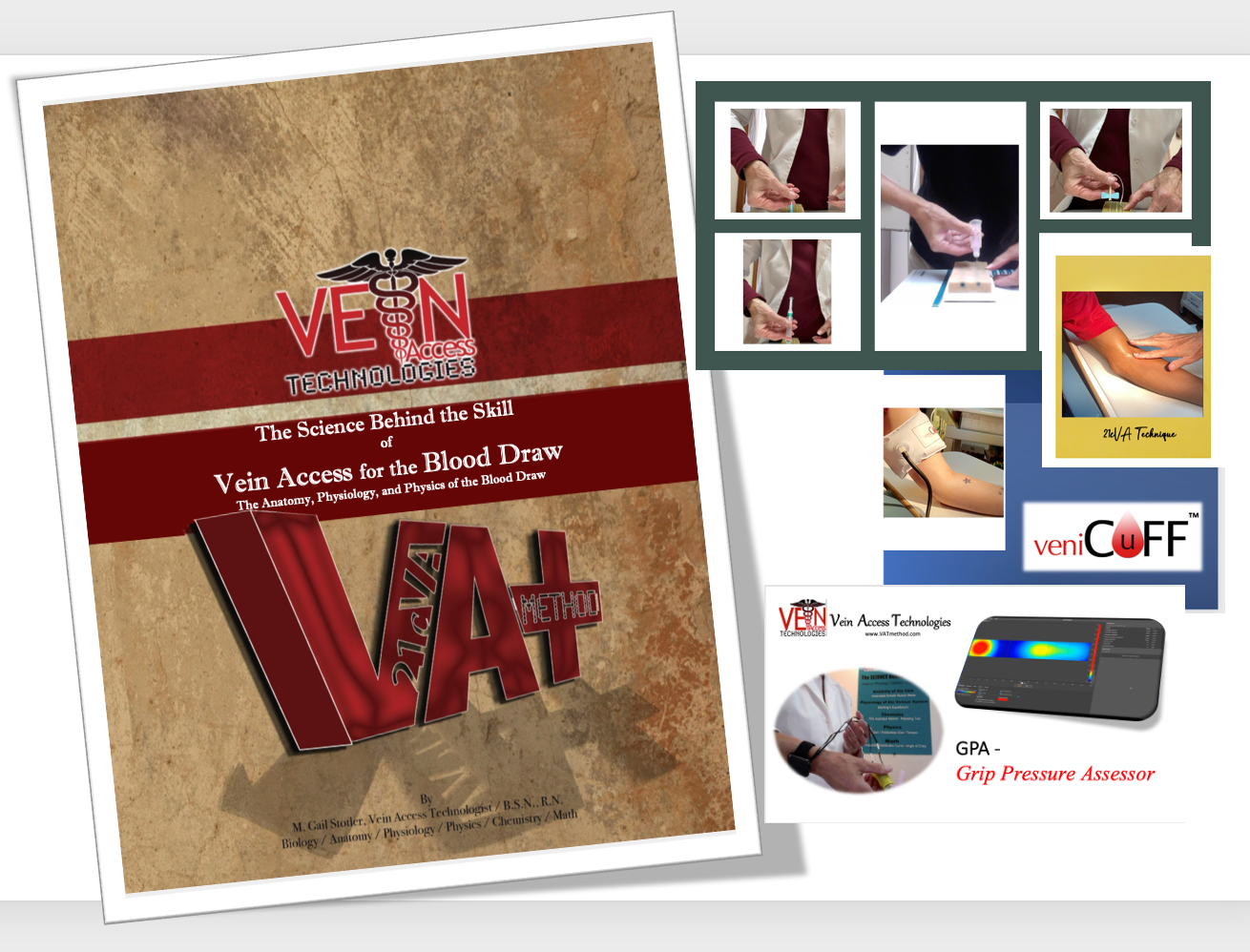
One example is veniCuff®, an inflatable cuff that VAT describes as having a pressure-relief mechanism that limits inflation pressure to 20 mmHg. Its design reflects VAT’s application of venous pressure principles to preparing a vein for access.
VAT also examines friction, grip pressure, and needle-entry angle as part of its teaching method. The Grip Pressure Assessor (GPA), for example, helps learners better understand grip pressure during training.
That’s STEM in action. Instead of simply telling someone to perform a technique a certain way, VAT teaches the science behind why it is done that way.
What Are CCIFs in Venipuncture?
VAT uses CCIFs to describe Complications, Compromises, Injuries, and Failures associated with venipuncture.
These can include multiple-stick events, vein rupture, infiltration, compromised or rejected blood specimens, bruising, unsuccessful access, and other problems affecting the patient, healthcare professional, specimen, or workflow.
The complete CCIF framework is explained on the STEM 21cVA educational website.
VAT’s goal is to apply STEM principles to better understand what contributes to these problems and what can be done differently.
No method can guarantee first-stick success with every patient. Anatomy, hydration, medical history, previous treatments, and other clinical variables can affect Vein Access. The purpose of STEM-based training is to remove as much guesswork as possible by giving healthcare professionals a systematic way to understand and assess the vein before the stick.
What Does It Mean to Become a Certified VAT Tech?
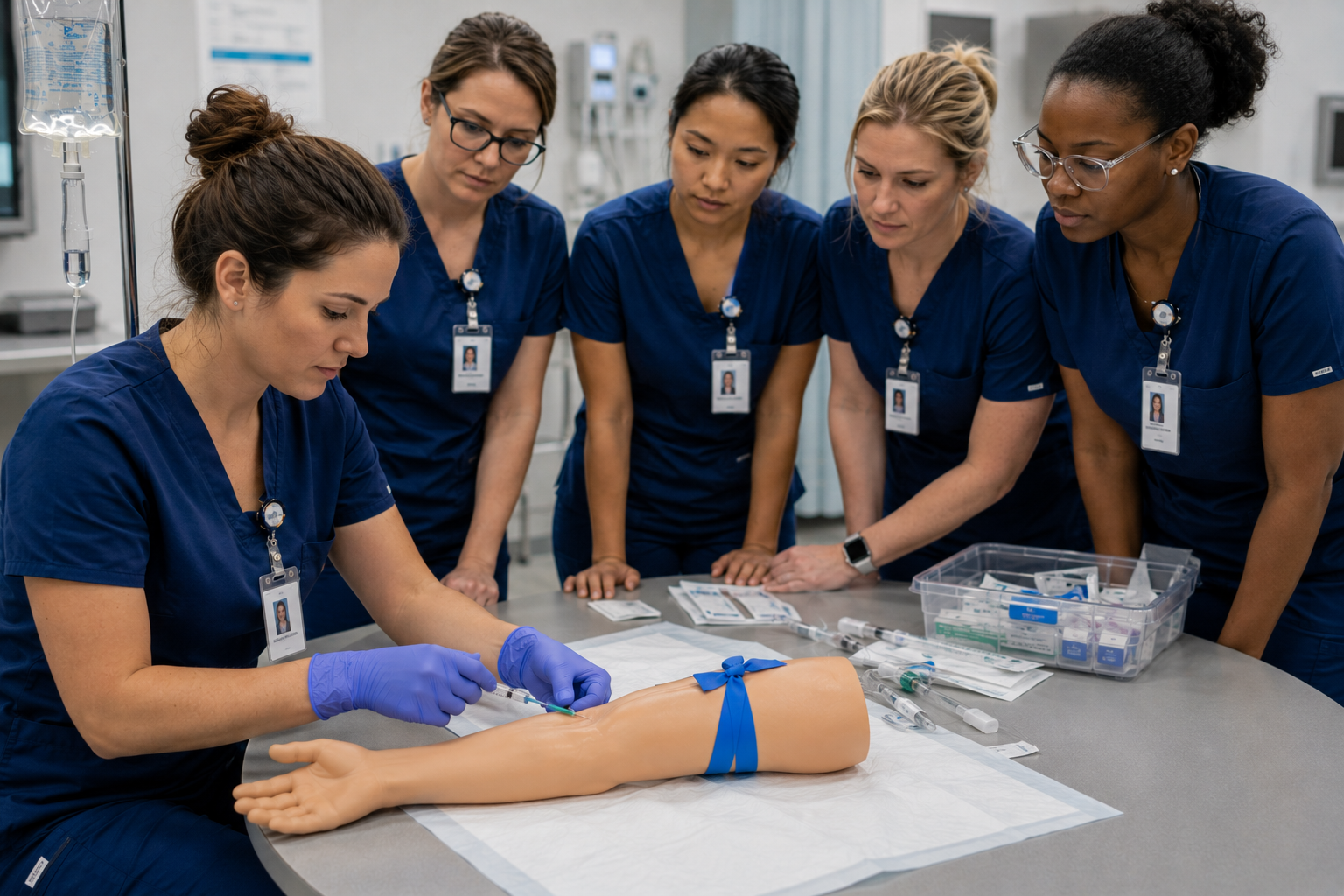
VAT’s training programs teach healthcare professionals the 21cVA STEM method for venipuncture procedures, including phlebotomy and IV access. Successful completion of applicable programs includes cVAT Certification and a 21cVA Certificate.
The training may benefit phlebotomists, nurses, EMS professionals, radiology professionals, and other qualified healthcare professionals who perform blood draws, IVs, injection of contrast, or other venipuncture procedures.
Interested professionals can explore VAT’s Vein Access training programs.
Frequently Asked Questions
What is STEM-based venipuncture?
STEM-based venipuncture applies Science, Technology, Engineering, and Math to locating, dilating, grading, accessing, and using a vein for blood collection or IV procedures.
Does STEM-based training guarantee first-stick success?
No. Every patient is different, and clinical variables can affect Vein Access. The purpose is to reduce guesswork through better assessment, scientific understanding, and a systematic approach.
Who can benefit from STEM-based Vein Access training?
Phlebotomists, nurses, EMS professionals, radiology professionals, and other qualified healthcare professionals who perform blood draws, IVs, injection of contrast, and related venipuncture procedures may benefit.
Ready to Learn the STEM Approach to Vein Access?
STEM is the 21st century teaching method. Vein Access Technologies applies that thinking directly to venipuncture.
The idea is simple: move away from trial-and-error and hit-and-miss thinking and toward science, understanding, measurement, and a repeatable process—from locating, dilating, and grading the vein to completing the intended blood draw or IV procedure.
Vein Access Technologies is located in East Alton, Illinois, conveniently serving healthcare professionals throughout Greater St. Louis and surrounding communities.
Ready to strengthen your venipuncture skills? Explore VAT’s Phlebotomy and IV Training programs and learn more about the science behind the 21cVA STEM Method.
Call (618) 259-7781 to learn more about VAT training opportunities.
Email: mgailstotler@VATmethod.com
This is good for everyone involved.
Recent Posts