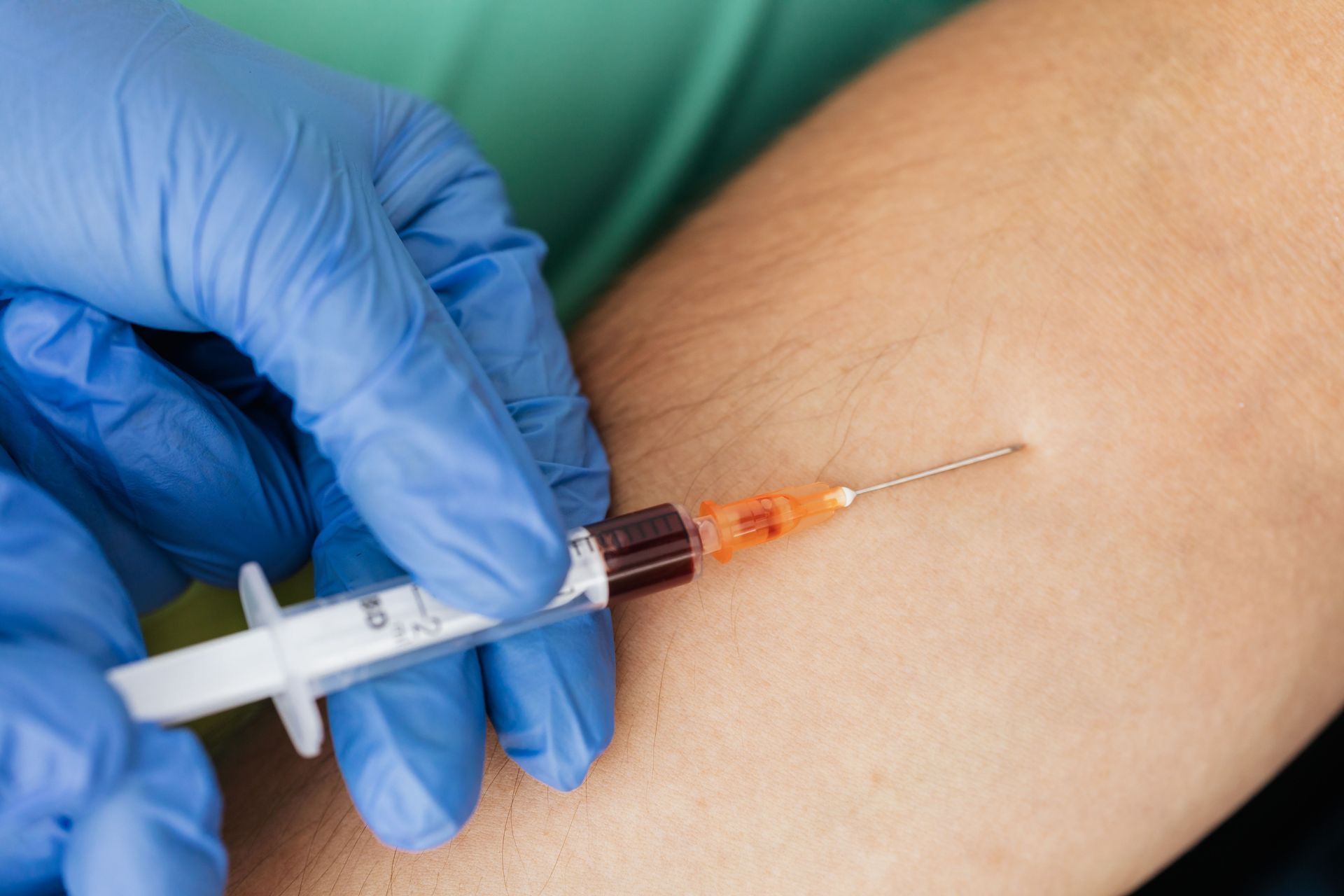
Choosing the right phlebotomy training program comes down to more than finding a convenient class. Look for hands-on instruction, experienced educators, a strong understanding of venipuncture, and a teaching method that explains not only
what to do, but
why.
Whether you're beginning a healthcare career or adding phlebotomy skills to your existing profession, the training you choose can influence how confidently you approach real patients.
At Vein Access Technologies (VAT) in East Alton, Illinois, the focus is on practical, STEM-based Vein Access education for healthcare professionals in Greater St. Louis and surrounding communities.
A Good Phlebotomy Program Teaches More Than a Blood Draw
It is easy to think of phlebotomy as simply learning how to draw blood. There is much more involved.
A healthcare professional needs to understand the vein before introducing the needle. That means learning anatomy and physiology, palpation, specimen collection, infection prevention, patient identification, communication, and how to recognize factors that may affect the procedure.
A strong program should help students develop skills in:
- Venous anatomy and physiology
- Vein assessment and palpation
- Blood collection and specimen handling
- Infection prevention and safety
- Patient identification
- Patient communication
- Venipuncture problem-solving
- Understanding complications and unsuccessful attempts
The goal should not be simply to complete a course. The goal is to understand what you're doing and become more confident in performing venipuncture.
What Should You Look for in Phlebotomy Training?
When comparing programs, start by asking how the course actually teaches venipuncture.
Look for Real Hands-On Instruction
You cannot learn everything about venipuncture from a textbook or video.
Those resources are valuable for introducing concepts and demonstrating techniques, but hands-on instruction gives students an opportunity to put that knowledge into practice while receiving immediate feedback.
Small classes can also make a difference. VAT's
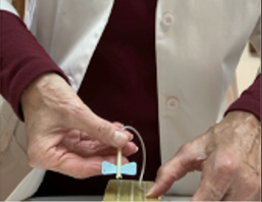
Phlebotomy and IV Training programs emphasize intensive hands-on instruction in small classes, allowing learners to work closely with the instructor.
Ask Who Is Teaching—and How
Experience matters, but so does the teaching method.
A good instructor should be able to explain
why a technique works instead of asking students to memorize a series of steps. When something doesn't go as planned, students need to understand what happened and what they can evaluate differently next time.
That is an important part of VAT's approach to venipuncture education.
Why Does a STEM-Based Approach Matter?
VAT's 21st Century Vein Access (21cVA) Method applies Science, Technology, Engineering, and Math to venipuncture.
Rather than treating a blood draw as a procedure learned primarily through repetition, VAT teaches learners to think systematically about what happens before and during the stick.
One important part of the method is learning to locate, dilate, and grade the vein before attempting access.
This gives students a framework:
Locate → Dilate → Grade → Access → Perform the Intended Function
That is STEM thinking in practice. Students are learning the science behind the procedure rather than simply being told where to place a needle.
Healthcare professionals interested in the methodology can learn more about the
21cVA STEM Method.
Don't Overlook What Happens After the Class
A phlebotomy course may only last several days, but professional learning shouldn't stop when the class ends.
When comparing programs, look at the educational resources available to reinforce what you've learned. Books, clinical videos, continuing education, seminars, and point-of-care materials can help healthcare professionals revisit important concepts later.
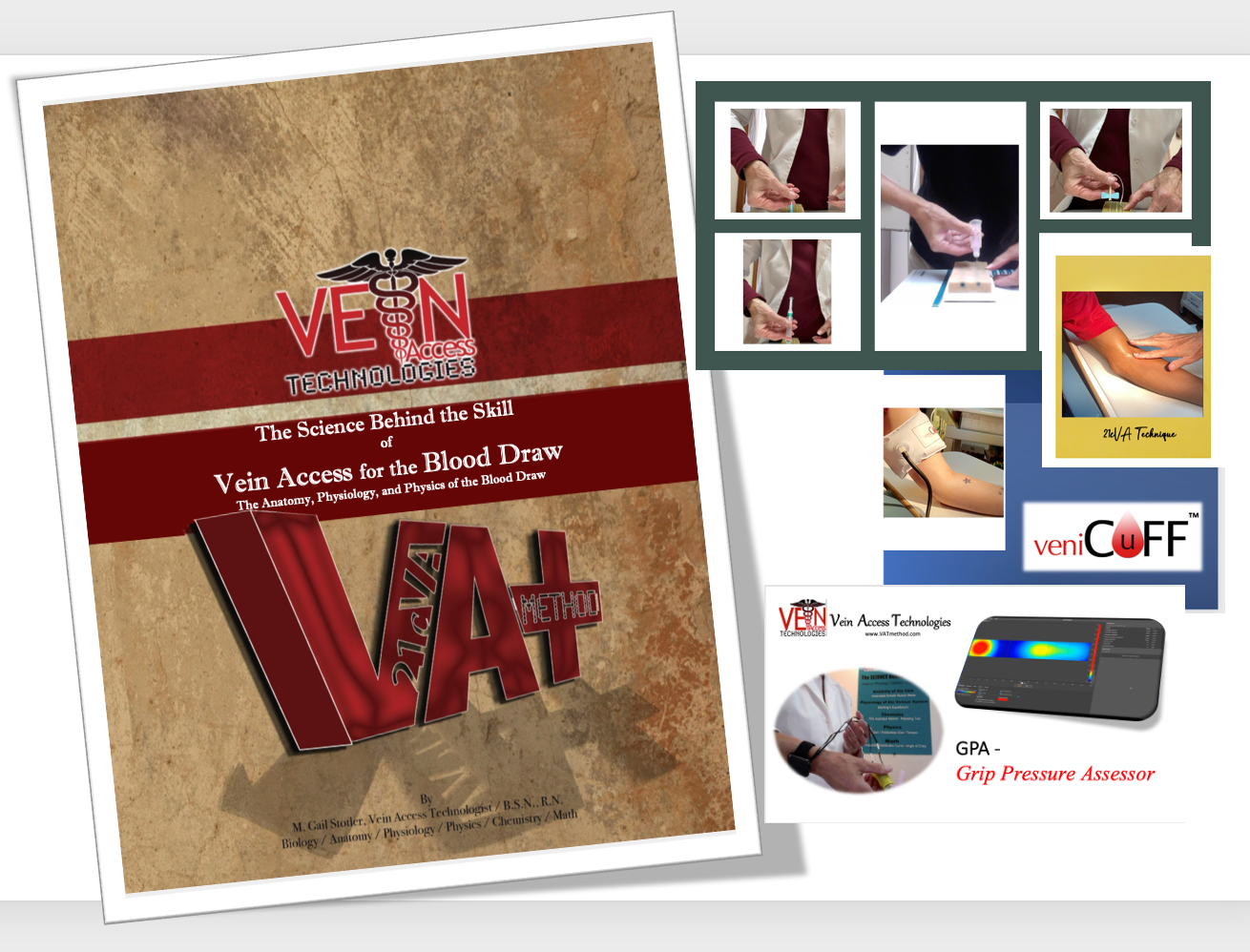
VAT supports its training with Vein Access educational resources and tools, including professional publications, clinical videos, veniCuff®, Vein Block®, and the Grip Pressure Assessor (GPA).
These resources are especially useful because they connect back to concepts taught through the VAT Method rather than functioning as unrelated add-ons.
Where Can Phlebotomy Training Take Your Career?
Phlebotomy can be an entry point into healthcare, but it is also an important additional skill for people already working in clinical settings.
Depending on qualifications, role, and employer requirements, phlebotomy skills may be useful in hospitals, physician offices, medical laboratories, outpatient clinics, blood collection settings, emergency care, and diagnostic environments.
Nurses, medical assistants, laboratory professionals, EMS professionals, and others who perform venipuncture may also pursue additional training to strengthen their skills.
Before choosing any program, check the licensing, certification, education, or employer requirements that apply to the position you want.
Frequently Asked Questions
How do I choose a good phlebotomy training program?
Look beyond price and course length. Compare hands-on instruction, class size, instructor experience, teaching methodology, curriculum, student support, and the resources available after training.
Is hands-on phlebotomy training necessary?
Venipuncture is a hands-on procedure. Classroom education and videos can explain the principles, but supervised practice allows learners to apply those principles and receive feedback on their technique.
Can phlebotomy training be completed entirely online?
Theory can be taught online, but learning to perform venipuncture requires practical instruction. If you're considering an online program, find out exactly how its hands-on training requirements are completed.
Where can I find phlebotomy training near St. Louis?
Vein Access Technologies provides hands-on phlebotomy and Vein Access education in East Alton, Illinois, serving healthcare professionals from Greater St. Louis and surrounding communities.
Find the Right Phlebotomy Training for Your Goals
The best phlebotomy training program isn't necessarily the one that gets you through class the fastest. Look for education that helps you understand the vein, the procedure, and the science behind what you're doing.
At Vein Access Technologies, the goal is to move venipuncture education beyond trial-and-error and hit-and-miss thinking through hands-on instruction and the STEM-based 21cVA Method.
If that approach fits your career goals, explore VAT's
Phlebotomy and IV Training programs or visit
Vein Access Technologies to learn more.
Call: (618) 259-7781
Email: mgailstotler@VATmethod.com